EP#24
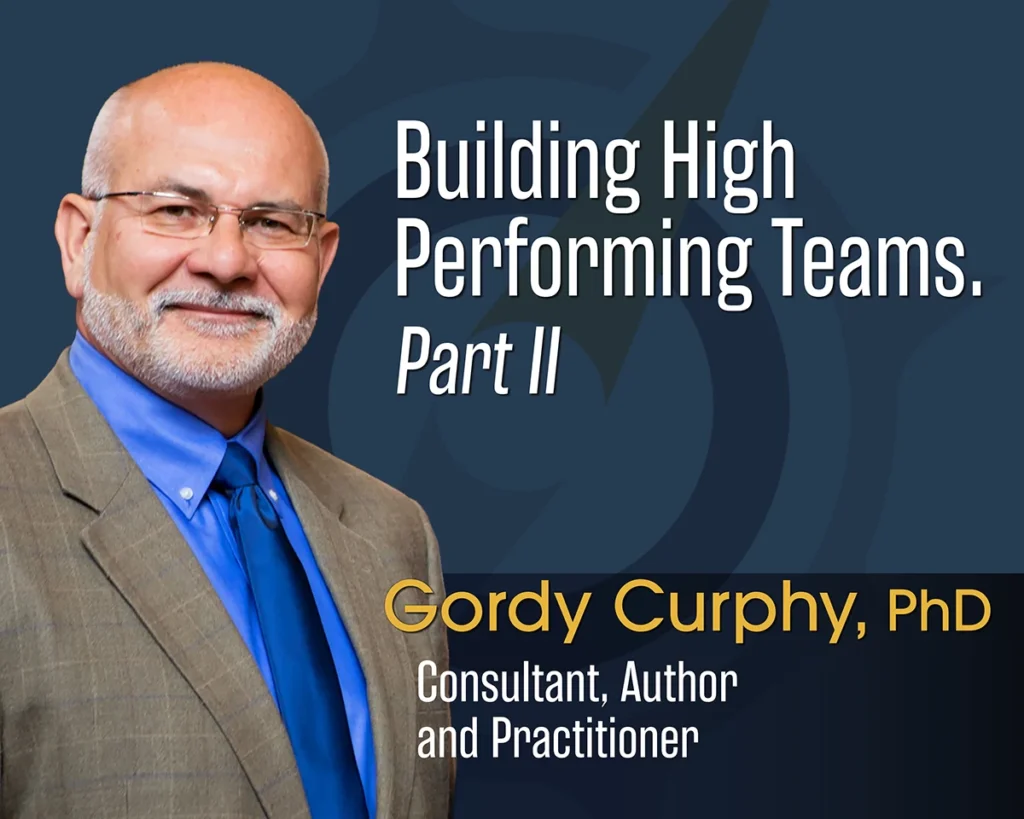
Guest | Gordy Curphy
This conversation is about why so many teams stall at “good enough” and what leaders can do to move from vague teamwork goals to measurable improvement. Gordy shares how his work with about 5,000 teams led to a revamped assessment, a new practical book for line and staff managers, and a clearer model for when a team should function as a true team versus a group or hybrid. The big idea is simple: feedback alone does not improve performance. Leaders need a roadmap, a diagnostic, and then tools plus an action plan to keep the team moving.
Share the Post:
Show Notes:
Key topics
- We discuss why the team assessment survey was revamped after analyzing data from about 5,000 teams around the world.
- Gordy explains that the survey is designed to help teams have better conversations about purpose, strengths, gaps, stakeholder expectations, and avoided issues.
- He makes the case that not every team needs to be high performing, but most teams can still become more effective and efficient.
- He uses the “scale” analogy to show that diagnostics tell you what is wrong, but not how to fix it.
- Gordy shares research showing that some teams improved by 50 to 60 points on a 100-point scale after they took action between time one and time two assessments.
- He introduces the distinction between the earlier book entitled “Ignition,” aimed at facilitators and consultants, and the new book being written for line and staff managers who need practical guidance.
- The leadership gap, as he sees it, is that most development focuses on self-awareness and one-on-one management skills, while the team level gets neglected.
- Gordy says organizations often take teamwork for granted even though teams are the vehicle by which work gets done.
- He argues that leaders need a shared mental model for teamwork so everyone knows what “good” looks like and how to build it.
- He describes Red Bull’s adoption of a common framework and training for about 3,000 people managers as an example of making teamwork language and expectations consistent.
- For senior leadership teams, he stresses the need to decide when to operate as a group and when to operate as a team, especially to avoid “analysis paralysis” and FOMO-driven over-inclusion.
- He highlights the importance of stakeholder feedback, not just internal self-ratings, because many teams overestimate how effective they really are.
- He notes that leaders and team members often live inside a reality distortion field, especially higher up the org chart, where information gets spun to protect reputations.
- The conversation closes with a practical three-step sequence: choose a teamwork framework, assess the team, and then use tools and an implementation plan to address the gaps.
Action items
- Pick a clear teamwork framework or mental model before trying to improve the team.
- Use an assessment to identify the team’s real strengths and gaps.
- Gather stakeholder feedback, not just internal self-ratings.
- Decide whether a specific issue is a group issue or a team issue.
- Build an action plan with follow-up so the team does not lose momentum.
Resources & Links:
- Curphy Leadership Consulting
- IGNITION: A Guide to Building High Performing Teams Book
- The Rocket Model
Connect with Gordy Curphy:
- Gordy Curphy: LinkedIn
Podcast Sponsor: